Masterpiece Crystal Avalokiteshvara Bodhisattva
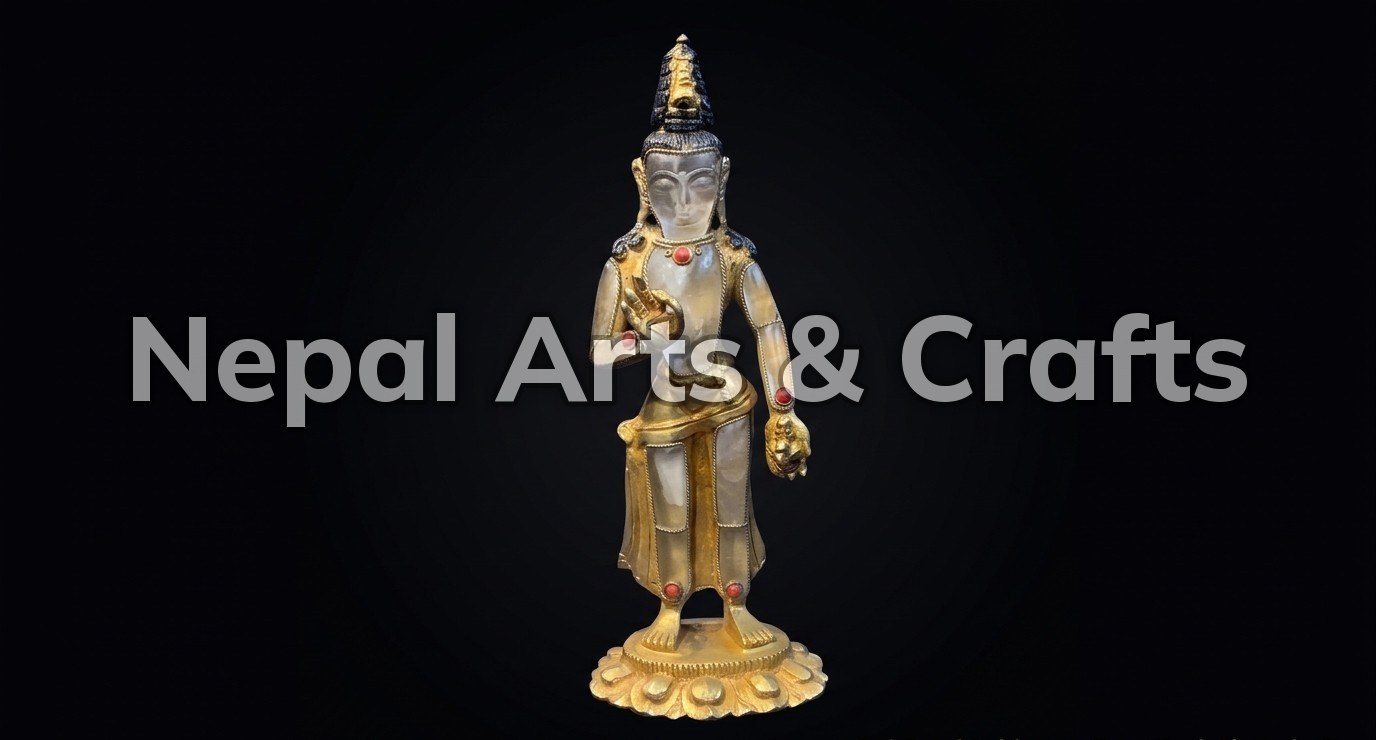
This handmade Avalokiteshvara Bodhisattva statue from Nepal is a distinctive masterpiece combining copper craftsmanship, translucent crystal, gold plating, and red gemstone details. Avalokiteshvara represents compassion and the aspiration to relieve suffering in Buddhist traditions.
The Radiance of Compassion: A Handmade Crystal and Gold-Plated Avalokiteshvara from Nepal
A Masterpiece of Nepalese Craftsmanship, Devotion, and Timeless Buddhist Art
Among the great traditions of Himalayan art, handmade Buddhist sculptures from Nepal hold a special place. Created through generations of specialized craftsmanship, these sculptures bring together spiritual symbolism, meticulous metalwork, and an extraordinary attention to detail.
Our handmade copper, crystal, and gold-plated Avalokiteshvara Bodhisattva, crafted in Nepal, is a beautiful example of this living artistic tradition.
More than a decorative sculpture, this exceptional piece represents the timeless Buddhist ideal of compassion through the revered figure of Avalokiteshvara, known as Chenrezig in Tibetan Buddhism and as Lokeshvara in many Nepalese traditions.
A Unique Combination of Crystal and Gold
What immediately distinguishes this Avalokiteshvara is its remarkable combination of translucent crystal, gilded copper, and carefully placed red gemstone details.
The crystal gives the figure a luminous, almost ethereal presence. Against this translucent surface, the rich gold-plated elements create a warm contrast, highlighting the facial features, ornaments, garments, hands, and other finely worked details.
The result is a sculpture that changes character with the surrounding light. The crystal catches and reflects light, while the gold surface provides depth and warmth.
This unusual combination makes the sculpture particularly appealing to collectors looking for distinctive Himalayan Buddhist artwork rather than mass-produced statues.
The Bodhisattva of Compassion
Avalokiteshvara is one of the most beloved bodhisattvas in Mahayana and Vajrayana Buddhist traditions.
His name is traditionally associated with the idea of observing or hearing the cries of beings, reflecting the bodhisattva's compassionate commitment to alleviating suffering.
In Nepalese Buddhist art, Avalokiteshvara appears in numerous forms, each carrying its own iconographic details and symbolism. His peaceful expression, elegant posture, ornaments, and refined appearance communicate qualities of compassion, wisdom, and spiritual awakening.
Our sculpture captures this peaceful character through its serene facial expression and graceful standing posture.
Handmade in Nepal
One of the most important qualities of this sculpture is that it is handmade in Nepal.
Nepal has a long and celebrated tradition of Buddhist metal sculpture, particularly in the Kathmandu Valley. Skilled Newar artisans have preserved sophisticated techniques of modeling, casting, chasing, engraving, gilding, and finishing for generations.
Creating a traditional sculpture requires patience and precision. Fine details must be carefully developed by hand, and the finishing process gives each piece its individual character.
Because of this handmade process, subtle variations should not be viewed as imperfections. They are part of what makes a handcrafted Nepalese sculpture unique.
Copper, Crystal and Gold: A Remarkable Artistic Combination
The materials used in this Avalokiteshvara contribute greatly to its visual character.
Copper
Copper provides the sculptural foundation and has long been an important material in Nepalese metal art. It allows artisans to create detailed forms while providing a durable foundation for further finishing.
Crystal
The translucent crystal-like body creates an unusual visual effect. Light passes through and interacts with the sculpture, giving the figure a distinctive luminosity that is rarely seen in conventional metal statues.
Gold Plating
The gold-plated elements emphasize the sacred ornamentation and create a rich contrast against the crystal. The gilded surface also draws attention to the intricate craftsmanship throughout the sculpture.
Red Gemstone Details
The carefully positioned red stones add another layer of color and visual balance. They draw the eye toward important areas of the figure and complement the warm golden finish.
A Sculpture That Tells a Story
Every element of a traditional Buddhist sculpture has the potential to carry meaning.
From the peaceful expression to the posture, ornaments, lotus pedestal, and symbolic hand gestures, the sculpture is designed as more than a representation of a human-like figure.
It is an artistic expression of compassion, spiritual aspiration, and the Buddhist path toward liberation from suffering.
The lotus pedestal is particularly important in Buddhist art. Growing from muddy water while remaining unstained, the lotus has long been used as a symbol of purity and spiritual awakening.
A Collectible Piece of Himalayan Art
For collectors of Himalayan art, what makes this Avalokiteshvara especially appealing is the combination oftraditional Nepalese craftsmanship and an uncommon material aesthetic.